

Betting odds compari
What Exactly Is a Betting Oddschecker?
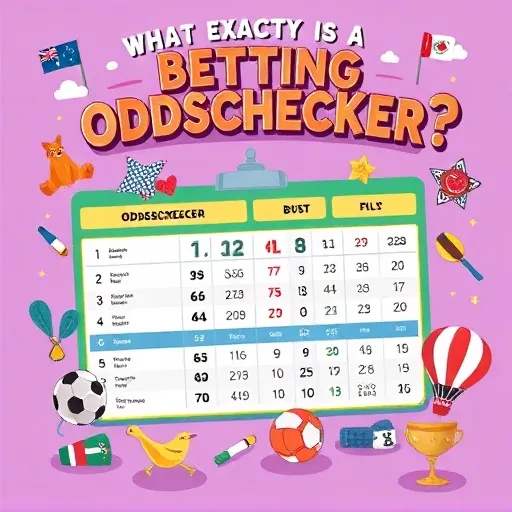
So what exactly is a betting oddschecker, anyway? At its heart, a betting oddschecker is a comparison tool that pulls together odds from a bunch of licensed sportsbooks and lays them out side by side so you can see everything at once. You pick an event — a football match, a tennis final, or even something niche like total corners — and the tool instantly shows you which operator is offering the best price on each outcome. The idea is dead simple, but the payoff is massive.
Here's what most casual bettors completely miss: bookmaker margins vary a lot from one platform to the next. One sportsbook might price a home win at 2.10 while another offers 2.25 on the exact same outcome. Stretch that across a hundred bets, and that gap compounds into real money. A betting oddschecker surfaces these discrepancies instantly, so you're never unknowingly taking the worst price on the market. That's the whole point of odds comparison — and honestly, it's the single easiest edge you'll ever pick up.
Beyond raw odds comparison, modern betting oddschecker platforms in 2026 have grown into full-blown research hubs. Most now pack in features like:
- Live odds movement tracking — watch how prices shift in real time as money flows into the market
- Market depth indicators — get a feel for where the liquidity is actually concentrated
- Historical price charts — spot patterns in how odds have moved over days or weeks
- Promotional overlays — flag boosted prices and enhanced place terms without digging through dozens of sites
- Implied probability calculators — turn fractional or decimal odds into clear percentages
This evolution says a lot about where things are headed: the modern bettor is a researcher first and a punter second. The tools have risen to meet that demand, and a good betting oddschecker now sits right at the center of that workflow.
Why Odds Comparison and Bookmaker Margins Are Non-Negotiable in 2026
Let's talk numbers for a second. The average overround — the bookmaker's built-in margin — across major markets sits somewhere between 4% and 8%, depending on the sport and the operator. That's the house edge baked into every single price. Now, if you consistently take prices from the operator with the highest margin, you're basically volunteering to pay more than you need to. A betting oddschecker lets you shave that margin down by always selecting the best available price across the market.
Consider a quick example. You're backing 100 selections at average odds of 2.00. If you take the best price every time — say an average of 2.08 thanks to comparison — your expected return shifts meaningfully over the sample. The difference between 2.00 and 2.08 doesn't sound like much, but across 100 bets it's the gap between a losing year and a profitable one. That's the quiet power of the betting oddschecker habit, and it's why price shopping beats gut feeling every single time.
On top of that, the 2026 betting landscape is more fragmented than ever. New licensed operators launch regularly, each competing for market share with sharper prices and creative promotions. Without a comparison tool, keeping tabs on who's offering what is practically a full-time job. A betting oddschecker does that heavy lifting for you — and it's why odds comparison has become second nature for anyone who's serious about value.
The Psychology of Price Shopping and Market Inefficiencies
There's a behavioral angle here too, and it's genuinely fascinating. Bettors who use comparison tools develop what researchers call "price anchoring resistance" — they stop treating the first odds they see as the default and start interrogating whether a better number exists elsewhere. That mindset shift alone improves decision quality. It's the same reason savvy consumers compare flight prices or insurance quotes; the principle transfers perfectly to betting markets. A betting oddschecker is basically the travel-comparison site of the sports betting world.
The language patterns around betting oddschecker usage are telling as well. Experienced bettors talk about "shopping the market," "taking the best price," and "beating the closing line." These phrases reflect a disciplined, analytical approach — one that treats betting as a skill-based activity rather than a casual flutter. A betting oddschecker is the primary tool that turns that vocabulary into practice rather than theory.
How to Use a Betting Oddschecker Effectively: Odds Comparison and Closing Lines
Okay, so you're sold on the concept. How do you actually squeeze maximum value out of it? Here's a practical framework worth bookmarking.
1. Compare before you commit. This sounds obvious, but the discipline matters. Before placing any bet, run the selection through your betting oddschecker of choice. Check at least five to ten operators. The best price is often — but not always — at the same few platforms, and knowing which ones consistently offer sharp prices on which sports is valuable intelligence you can bank on.
2. Track closing lines. One of the most useful features of a modern betting oddschecker is the ability to see how a price moved from open to close. If you consistently beat the closing line — meaning you took a better price than what was available at kickoff — that's a strong indicator your analytical process is sound. Conversely, if you're consistently taking worse prices than the close, it's time to rethink your timing or your market selection.
3. Identify market inefficiencies. Betting oddschecker platforms reveal where operators disagree. When one book prices an outcome at 3.50 and another at 3.80, that gap signals genuine uncertainty or differing models. Those disagreements are exactly where value tends to hide. You don't need to know who's right — you just need to take the inflated price and let variance do its thing over time.
4. Monitor promotions without the noise. Boosted odds and enhanced each-way terms are scattered across dozens of platforms. A comparison hub consolidates these offers so you can quickly evaluate whether a promotion is genuinely valuable or just marketing fluff. In 2026, with promotional offers getting more inventive by the month, this filtering function is worth its weight in gold.
5. Build your own baseline. Use the betting oddschecker's historical data to establish your own fair-odds models. If you know how a particular market typically prices, you can spot anomalies faster. The tool isn't just a shopping aid; it's a research archive — and a darn good one.
The Technology Behind Modern Oddscheckers and Real-Time Data
Under the hood, today's betting oddschecker platforms rely on real-time data feeds, API integrations with licensed operators, and increasingly sophisticated algorithms that normalize odds formats and flag arbitrage opportunities. Some platforms now incorporate machine learning to predict odds movements, giving users a heads-up when a price is likely to shorten. That's a serious upgrade from the clunky comparison tables of a few years back.
The user experience has improved dramatically too. Clean interfaces, mobile-first design, and customizable alerts mean you can get notified the moment a specific price hits your target. In 2026, you can set a threshold — say, "alert me when Team A's win price exceeds 2.50" — and let the betting oddschecker do the monitoring while you get on with your day. Responsible operators and platforms also build in tools like deposit limits, time reminders, and self-exclusion features. A quality betting oddschecker respects that betting should remain entertainment first, and it partners with licensed, regulated operators that share that commitment.
Common Mistakes to Avoid With Odds Comparison and Bankroll Management
Even with a great tool, bettors stumble. Here are the pitfalls that show up most often when people first start using a betting oddschecker:
- Chasing the highest number blindly. The best price isn't always at the most reliable operator. Check licensing, withdrawal reputation, and terms before committing funds.
- Ignoring the overround. Some markets look attractive on the surface but carry massive margins. Use implied probability calculations to see the true cost.
- Over-betting because you found "value." Finding a good price doesn't mean the bet is +EV. Bankroll management still rules everything.
- Neglecting account restrictions. Sharp bettors get limited. Rotate across multiple licensed operators and don't put all your action through one platform.
- Treating the betting oddschecker as a tipster. It's a comparison tool, not a prediction engine. The analysis is still on you.
The Bottom Line on Betting Oddschecker Tools and Value Betting
In 2026, the betting oddschecker has cemented its place as the essential utility for anyone serious about getting value from sports betting. It democratizes access to market-wide pricing, exposes inefficiencies, and enforces the kind of discipline that separates recreational bettors from thoughtful ones. Whether you're a weekend punter or a seasoned analyst, making odds comparison a non-negotiable step in your process is one of the highest-leverage changes you can make — and a betting oddschecker makes that step almost effortless.
The tools are better than ever, the market is more competitive than ever, and the information advantage is sitting right there in front of you. Use it. Compare the prices. Take the best number. And remember — a betting oddschecker doesn't guarantee a win, but it guarantees you're not leaving value on the table before the game even starts. That's a pretty good place to begin.